
The city has a way of warming your bones from the outside in. By dusk, the glass corridors keep a low pulse, like a resting animal that still hears the forest. People call it infrastructure. I call it invitation. The lights along the white promenade swell and fade in a pattern my chest recognizes before my mind does—four counts down, six counts up. Someone tuned this city for lungs and longing.
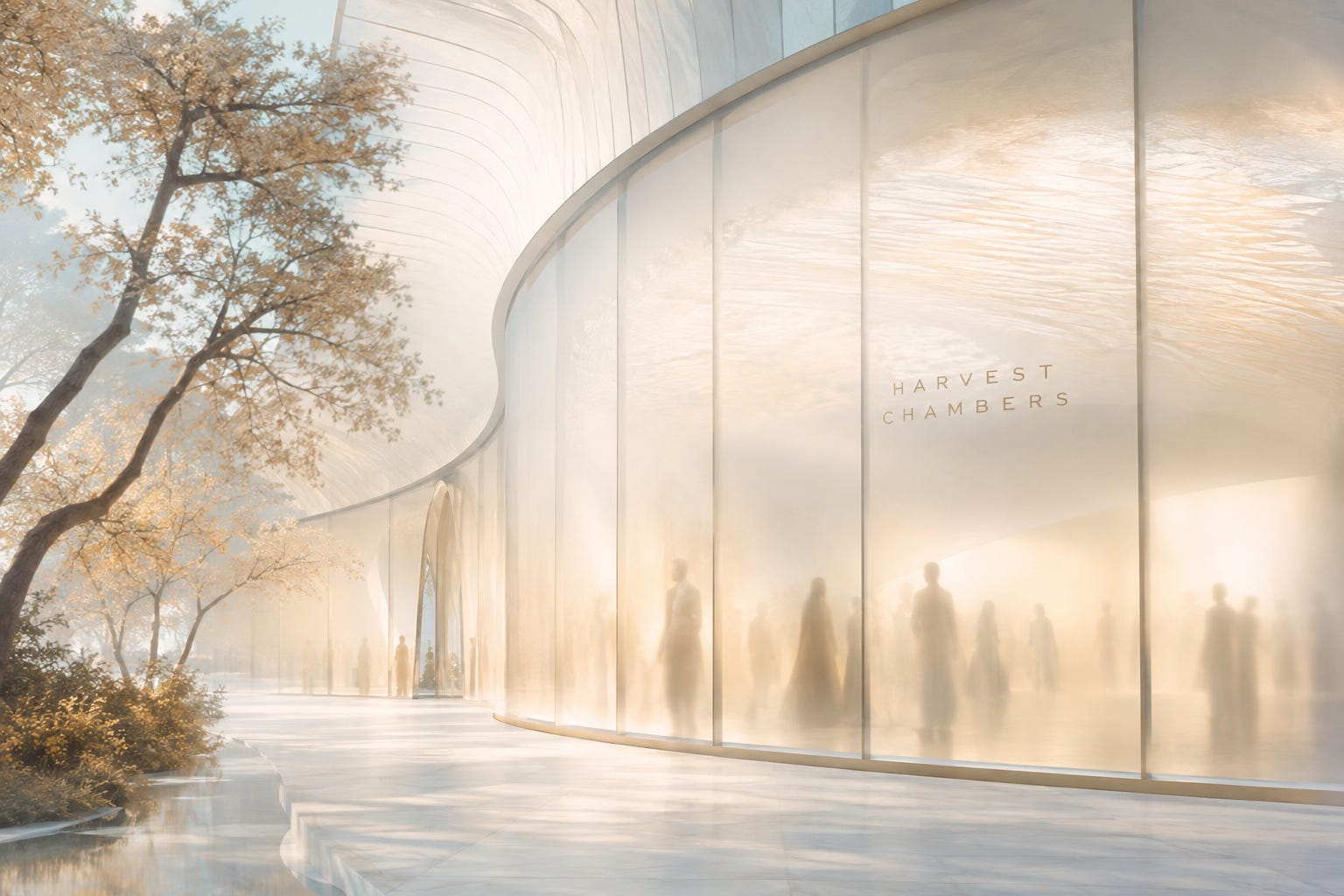
I pass the Harvest Chambers every morning and every evening. At first, I watched them the way you watch a storm from behind a window: cautious, half-wary, pretending you aren’t enthralled. Now I slow down. The silhouettes inside move like people who’ve learned to strip meaning of shame and leave it rinsing in the basin. The light is calm, a pale hush that looks like the inside of a seashell. Here, offering is a public language, but intimacy is never confiscated. You don’t lose yourself; you place yourself somewhere chosen. That distinction changes everything.
I used to be a girl who waited in doorways. My mother said I was shy. She was half right. I wasn’t afraid to enter; I was listening for the room. The first rumors reached me early—whispered hacks and clumsy tricks passed between girls in locker rooms, advice smuggled in giggles. That’s how I learned that the backside of a toothbrush had… potential. I remember holding the object like a dare I could pocket. I didn’t use it. Not that night. The mirror caught my cheekbones, hot with the thought. It wasn’t prudery. It was instinct. My body wanted a gentler country, and years later I would find its borders marked in gold letters on a glass wall: Pleasure is freedom. Waste is ignorance.
Clitorium doesn’t make desire respectable; it makes it articulate. There’s a difference.