
It begins as weather.
Geneva folds itself into the evening with that unshowy autumn discipline I’ve grown to trust: a fine, persistent rain softens the street’s edges; the tram sighs past as if it has decided not to disturb the kitchens and their late pots; the plane trees keep a handful of gold leaves the way a hand keeps a promise. Our windows bloom with fog from the heat inside, and the apartment smells faintly of wet wool, orange peel, and the shy ache of something warm waiting to be used.
Juan is already where I want him: back against pillows, wrists wrapped in soft ties that mark intention rather than punishment, eyes under satin like a night pressed into a strip. The blindfold sits prettily; it has learned the shape of his temples. He breathes the way I taught him—counting inward, counting outward—his ribs taking their orders from the metronome of rain on the balcony rail. When he exhales, it’s a ribbon of sound he might not even hear. When he inhales, his chest lifts in a way that makes me want to be kinder than I planned.
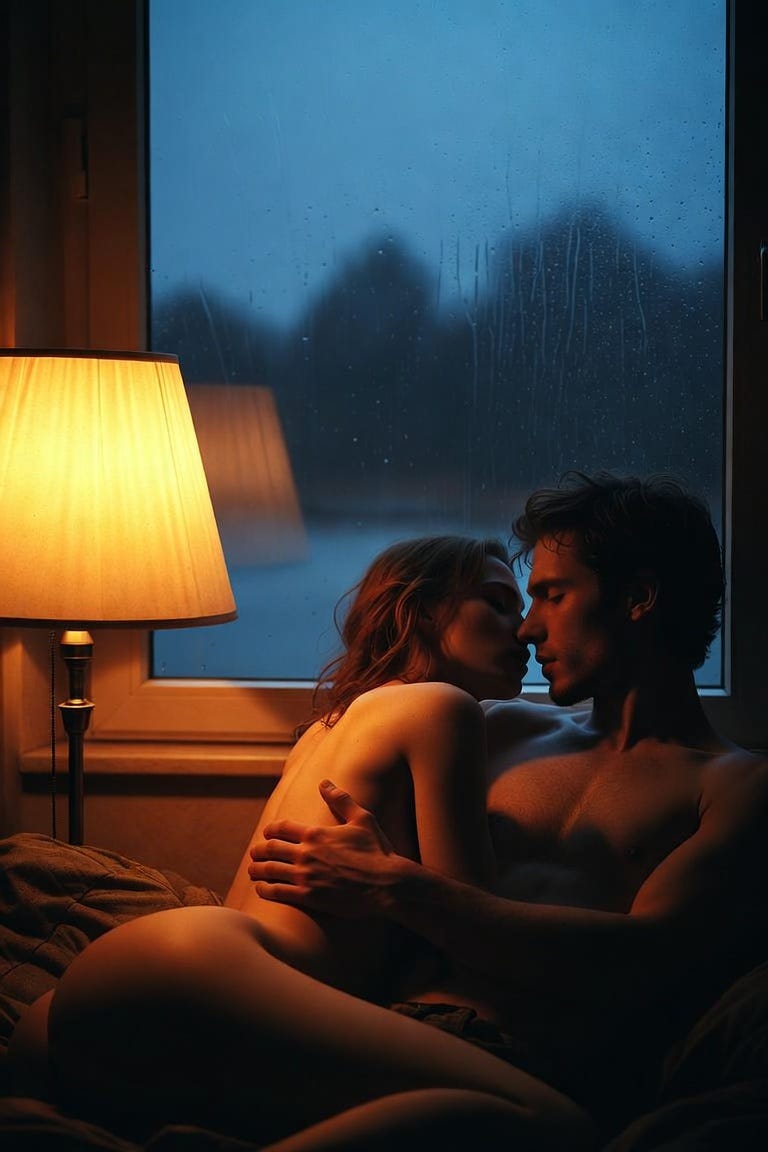
“Breathe,” I whisper, not because he needs reminding, but because the word is a key. It opens a particular door in him, the one that leads from obedience to trust.
He nods. The nod travels through his arms into the knots and says: I remember the language.